

Project Info


Project Description
High technology in pain therapy
2 october 2018
14.30 – 18.30
Auditorium, Universitary Campus, Le Benedettine
Referents: Adriana Paolicchi, Giuliano De Carolis
Scientific Organizing Committee: Adriana Paolicchi, Giuliano De Carolis, Mery Paroli, Lara Tollapi
14:30
Registration of participants
14:45
Introduction
Adriana Paolicchi, Pisa
Moderators: Domenico Gioffrè, Ferdinando Sartucci
15:00
Lectio Magistralis – Electronimomulation in pain treatment: 50 years of history and future prospects
Giuliano De Carolis, Pisa
15:20
Translational anesthesia at the time of robotics
Vincenzo Lionetti, Pisa
15:40
New perspectives in the treatment of cancer pain: drugs and devices
Lara Tollapi, Pisa
16:00
Discussion
16:40
Innovation in postoperative pain control: centrality of the patient with advanced technological solutions
Adriana Paolicchi, Pisa
17:00
The endotics system: how the robotics makes the colonoscopy painless and safe
Emanuele Tumino, Pisa
17:20
From training to “Knowing how” to the transformation of knowledge, national and international scenarios
William Raffaeli, Rimini
17:40
ROUND TABLE
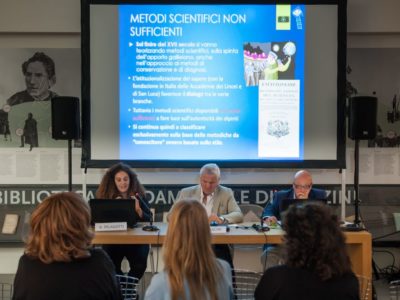
The pain between history and actuality. From historical studies to new technologies: Telemedicine and teleconsultation
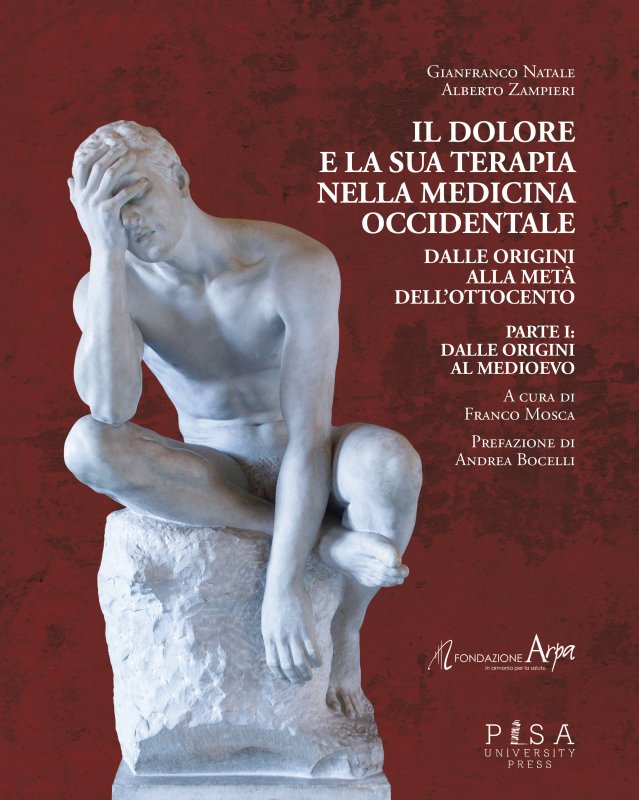
Presentation of the first volumes of the “Sedare Dolorem” series, Pisa University Press
Live presentation of a model for patient management in the pain management network
Claudia Napolitano, Pisa
Gianfranco Natale, Pisa
Adriana Paolicchi, Pisa
Cosimo Pasquini, Florence
Paolo Rossi, Pisa
18.30
Closing of the convention
The conference is part of the program for students of the Degree in Medicine and Surgery
Abstract
Pain has always afflicted man and is one of the most important problems of medicine. Despite the discovery of anesthetics and the introduction of steroid and non-steroidal painkillers, the treatment of physical suffering still remains a distant destination, especially in the field of oncology. This book tells the story of pain in western medicine in two volumes, starting from ancient times until the mid-nineteenth century. In addition to providing interesting and interesting etymological insights, this first volume documents the prehistoric, Greek and Roman periods, to arrive at the Middle Ages, with the monastic, Byzantine and Arab medical traditions, and the birth of the Salerno medical school and the first universities. The schools and the main medical figures who have contributed to the knowledge and characterization of pain and its treatment are examined. In particular, greater emphasis was given to strictly physical pain, due to diseases and traumas afflicting the body. The psychic suffering and pain contemplated in the religious and philosophical field has been considered limited to those aspects important for a contextualization of historical and scientific thought. A rich iconography accompanies the text, with the intent of more fully documenting the research carried out. Portraits of characters and images of book frontispieces, ancient manuscripts, medicinal plants, equipment and medical instruments help to better understand the long journey of human progress in the attempt to dominate and defeat physical suffering. The work was conducted by consulting the scientific literature on the subject and numerous original works.
FACULTY
Giuliano De Carolis, Anesthesia and Pain Therapy, Pisa University Hospital, Pisa, Italy
Domenico Gioffrè, Professor of Bioethics of Pain and of end of life care, University of Pisa, Italy
Vincenzo Lionetti, Associate Professor in Anaesthesiology, Sant’Anna School of Advanced Studies, Pisa, Italy
Claudia Napolitano, Director of PISA University Press, Pisa, Italy
Gianfranco Natale, Associate Professor of Human Anatomy, University of Pisa
Adriana Paolicchi, Director of Anesthesia and Pain Therapy, Pisa University Hospital, Pisa, Italy
Cosimo Pasquini, Telbios (AB Medical Group)
Eva Perini, President of the Vitality Onlus Project, Lucca, Italy
William Raffaeli, President of the ISAL Foundation, Rimini, Italy
Paolo Rossi, President of the PISA University Press Scientific Committee, Pisa, Italy
Ferdinando Sartucci, Associate Professor of Neurology, University of Pisa, Italy
Lara Tollapi, Anesthesia and Pain Therapy, Pisa University Hospital, Pisa, Italy
Emanuele Tumino, Gastroenterology and Diseases of the Replacement, Pisa University Hospital, Pisa, Italy
Alberto Zampieri, Former Professor di Medical Semeiotics, University of Pisa